
NYA Youth Survey
A survey commissioned by NYA in April 2024 revealed that the nation’s young people are crying out for youth work activities that provide fun, as well as to feel a sense of belonging in their local community.
The survey highlights the huge benefits of youth work where it taking place, young people’ motivations for participating in youth work and how it has benefited them.
Who did we survey?
The research was conducted by market researchers Savanta with a representative sample of 1170 young people, aged between 16-19 years, completing the survey in early April 2024.
What the survey tells us about the need for more youth work
The survey brings to the fore the huge impact of youth work on young people’s mental wellbeing, confidence and how valued they feel in their community.
Sadly, it also highlights that young people are feeling disconnected from their community, with many – in particular in the later teens – struggling with social anxiety.
It shows that where high quality youth work is taking place, young people are reaping the benefits to their mental and physical wellbeing, self confidence and sense of belonging – factors which are essential for young people to stay well and make a positive contribution to their communities.
The impact is increased amongst those who attend on a weekly basis, enabling them to form friendships and develop the essential life skills which will set them in good stead for their futures.

Key Findings
From the data provided, we are able to extract seven key insights, please click below to read more about each.
A little over half of our respondents have heard of youth work before

59 per cent of respondents have heard of youth work. This is even higher for black participants (74 per cent). Interest in decision-making and leadership also increases awareness, with 65 per cent informed compared to 52 per cent who aren’t interested.
The majority of respondents think that there are not enough youth club options in their local area
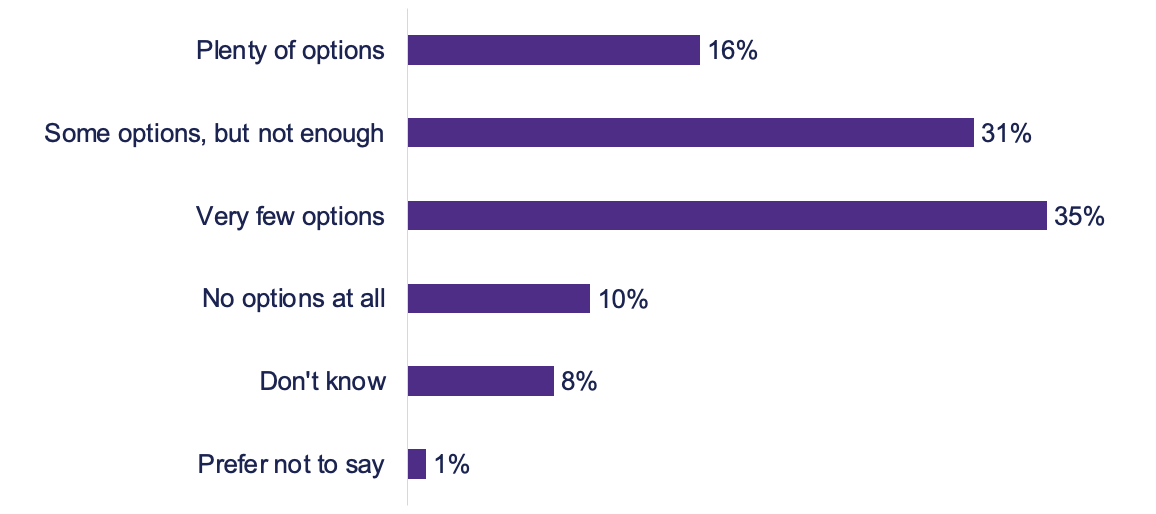
Younger respondents were more uncertain about the availability of youth clubs, programmes and activities in their area. (10 per cent of 16-17 year olds responded ‘don’t know’ compared to 6 per cent of those aged 18-19).
Respondents most wanted to see fun activities or activities supporting employment
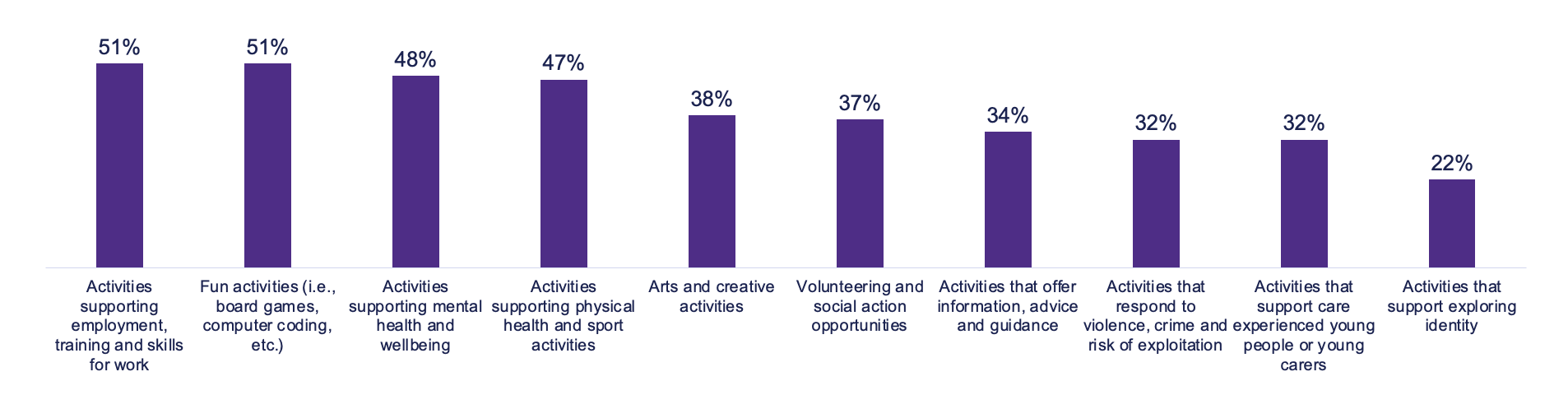
51 per cent of respondents wanted to see fun or employment supporting activities. Activities supporting mental and physical health also particularly desirable, coming in at 48 and 47 per cent respectively.
Building confidence, enjoyment and to learn new thing are the top reasons given for engaging with youth work
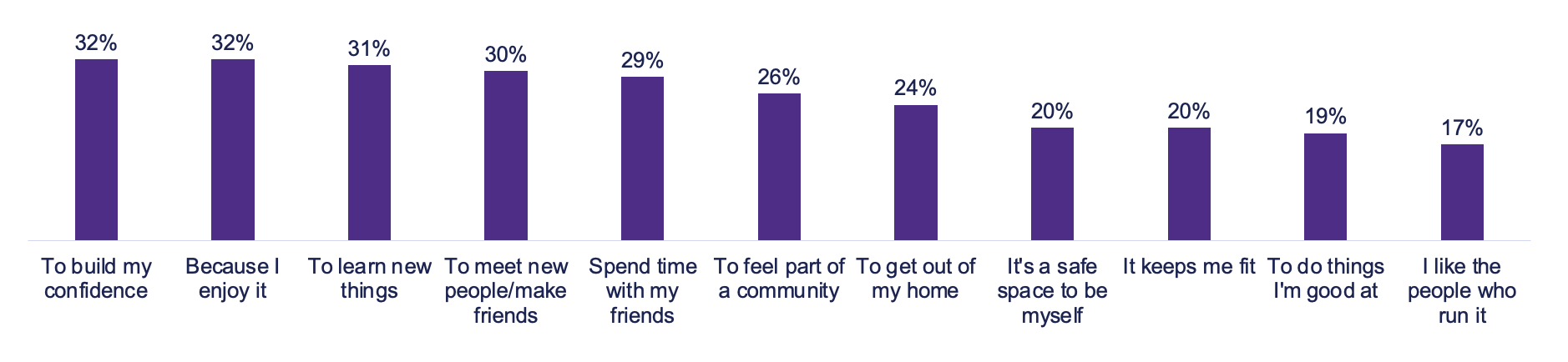
Respondents self-identifying as female are more likely to engage with youth work activities to build confidence, to make friends or because they enjoy it.
Those self-identifying as male are significantly more likely to engage with youth work to learn new things, in order to keep fit or to do things that they’re good at.
Compared to white and Asian respondents, black respondents are more likely to engage with youth work to learn new things.
The biggest impact that youth work has had on respondents is a feeling of value and inclusion
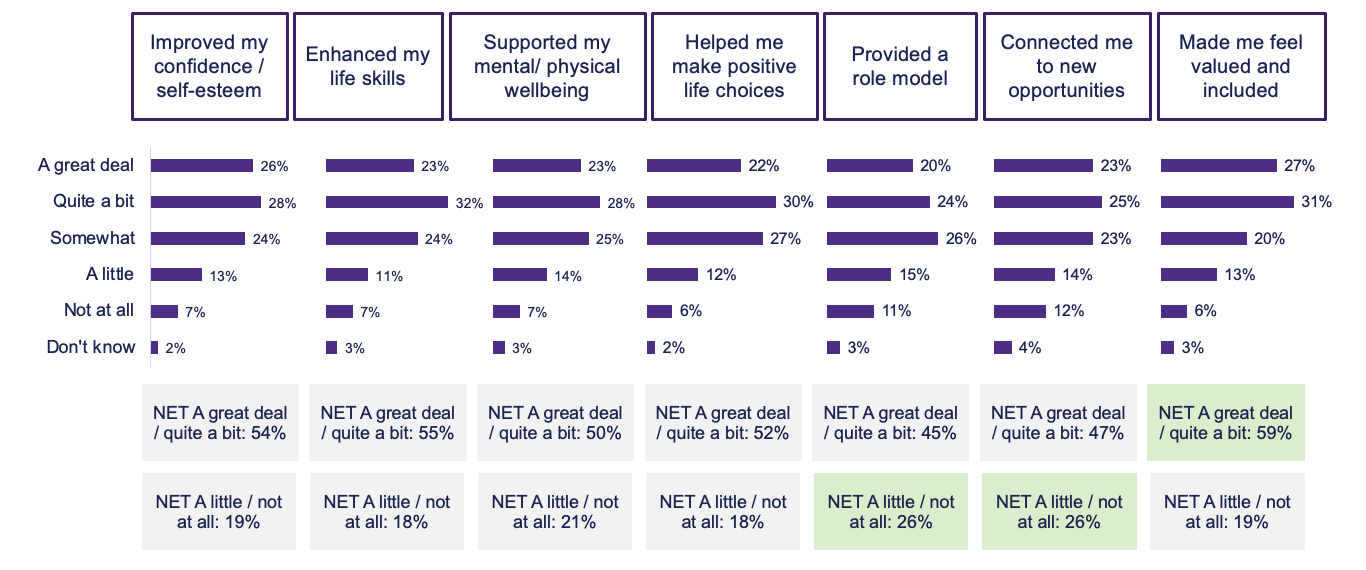
59 per cent of respondents felt that youth work had made them feel valued and included either a great deal or quite a bit.
Respondents identifying as are more likely to say that youth work has greatly improved their confidence and self-esteem.
Those who feel they belong in their community are more likely to report that youth work has greatly supported their mental and physical wellbeing.
Top barriers to engaging with youth work are lack of time and social anxiety / shyness
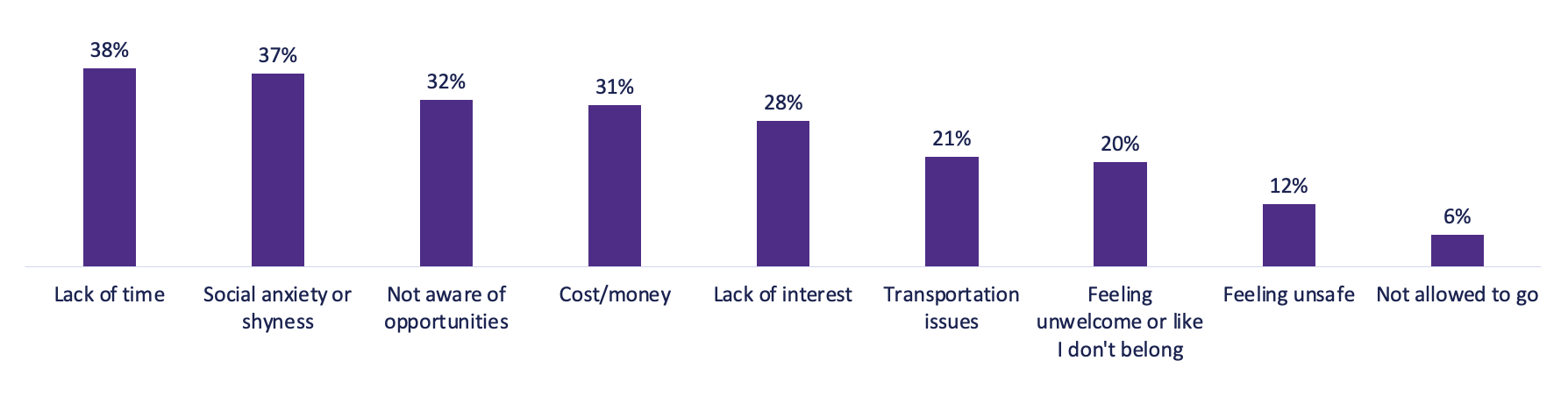
38 per cent of respondents felt that lack of time prevented them from engaging with youth activities, whilst 37 per cent felt that social anxiety or shyness was a barrier for them.
These rates are higher for the older respondents, compared to the younger respondents.
Almost half of respondents feel they belong to their local community
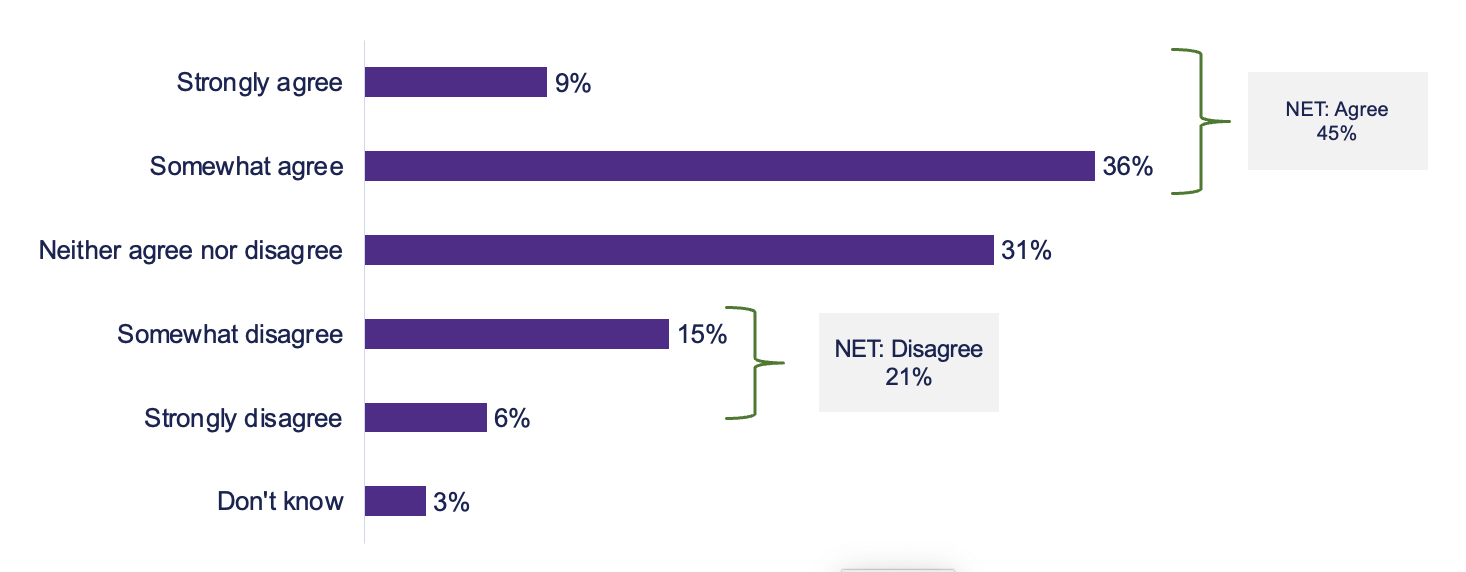
However, almost one third do not feel strongly either way.
Respondents identifying as male are more likely to agree (51 per cent) compared to those identifying as female (40 per cent).

NYA’s ambitions for the youth work sector
The National Youth Agency is committed to working with the future government to bring about the investment needed to fund a sufficient level of youth work provision in communities, as well as give youth work the recognition it warrants amongst allied sectors.
Our vision is for two Level 6 qualified youth workers and four Level 2/3 qualified youth support workers to be available in every secondary school catchment area across England, in order to meet the burgeoning demand for the particular skills and support youth work provides.
That amounts to 8,433 new qualified youth workers and additional 21,369 qualified youth support workers.

Hear more from young people
We spoke in depth with three young people to find out what they thought about their local youth provision, read their stories below:



Youth Sector Workforce Survey

