

Youth work is changing and so are the pressures facing the people who deliver it.
The National Youth Agency’s Workforce Survey 2026 provides a comprehensive picture of the state of the youth work workforce in England.
Drawing on responses from more than 1,100 youth workers, the survey explores how many people make up the workforce, what qualifications they have, what motivates them, the challenges they face, and what support they need to ensure youth work can effectively support young people today.
This research complements the National Youth Sector Census and directly informs the NYA’s strategy to build a stronger, better qualified and recognised youth work workforce.
Why the data matters
Youth workers are supporting young people through increasing levels of complexity, from mental health and wellbeing, online harm, youth employment and skills, exploitation, and crime and antisocial behaviour. At the same time, they have told us that they are experiencing increased demand for targeted support, instability and declining access to qualifications and secure employment.
The Workforce Survey 2026 shines a light on:
- A sector providing vital support for young people and increasingly needed to fulfil the goals of the National Youth Strategy
- Growing demand for targeted and specialist youth work
- The urgent need for investment in skills, qualifications and workforce stability
- The gap between national ambition for youth work and the reality on the ground
By sharing this evidence, the NYA aims to inform policy, influence investment, and support the sector to build a sustainable, skilled youth work workforce for the future.
Rising demand, increasing complexity
Respondents report an increased demand for specialist support in the following areas:
- mental health and wellbeing (81%)
- safeguarding and online harm (68%)
- for youth employment, training and skills for work (62%)
- crime and antisocial behaviour (56%)
- young people at risk of exploitation (52%)
- care‑experienced young people (42%)
This reflects the expanding role youth workers play as trusted adults often acting as a first point of contact for young people in need, facing risk, harm or exclusion.
”We now regularly provide food or take donations for clothing. We’re careful about it. We don’t want to be seen to do this, but we don’t know what else to do. It’s difficult to do things, you know, if they’ve not eaten, they’re distracted. We kind of feel like we have to."
Focus group participant
A workforce under pressure
While demand is growing, the survey highlights worrying trends around workforce stability and security:
- A decline in full‑time roles, from 59% in 2024 to 50% in 2026
- Permanent contracts have fallen from 83% to 67%
- The voluntary and community sector continues to employ the majority of youth workers, often with limited financial security
Many youth workers report blurred boundaries and limited career progression, contributing to increased burnout and uncertainty.
Skills qualifications and pathways
Access to qualifications and professional development is a critical issue for the sector:
- Just 55% of respondents hold a youth work qualification
- 37% hold professional qualifications at Level 5, 6 or 7
- The proportion of youth workers with recognised qualifications has fallen since 2024
Youth workers consistently identify strengths in relationship‑building and safeguarding, but want more training in:
- Supporting young people with SEND
- Digital skills and online safety
- Personal and social development
- Reflective practice, supervision and peer support
Many face time and funding barriers to progressing their qualifications.
Who makes up the workforce?
The survey also provides insight into workforce demographics:
- 82% identify as White British
- 62% are female
- 71% are aged 36 or over
- 62% have more than ten years’ experience in youth work
What needs to change
The findings make a clear case for action. The National Youth Strategy places growing emphasis on trusted adults and early intervention, but the workforce needs the capacity, stability and investment to meet rising demand.
The National Youth Agency is calling for:
- Clarity on the £15 million workforce investment pledged by the Government, how it will support training, especially for Levels 1 to 3, ensuring voluntary and community sector organisations can access this support
- Recognition of youth workers as essential professionals within education, public health, employment and violence prevention strategies
- Expansion of training and apprenticeships to build a pipeline of qualified youth workers
- Clear sufficiency benchmarks enshrined in the Statutory Duty to avoid a postcode lottery for young people who need the support of youth workers
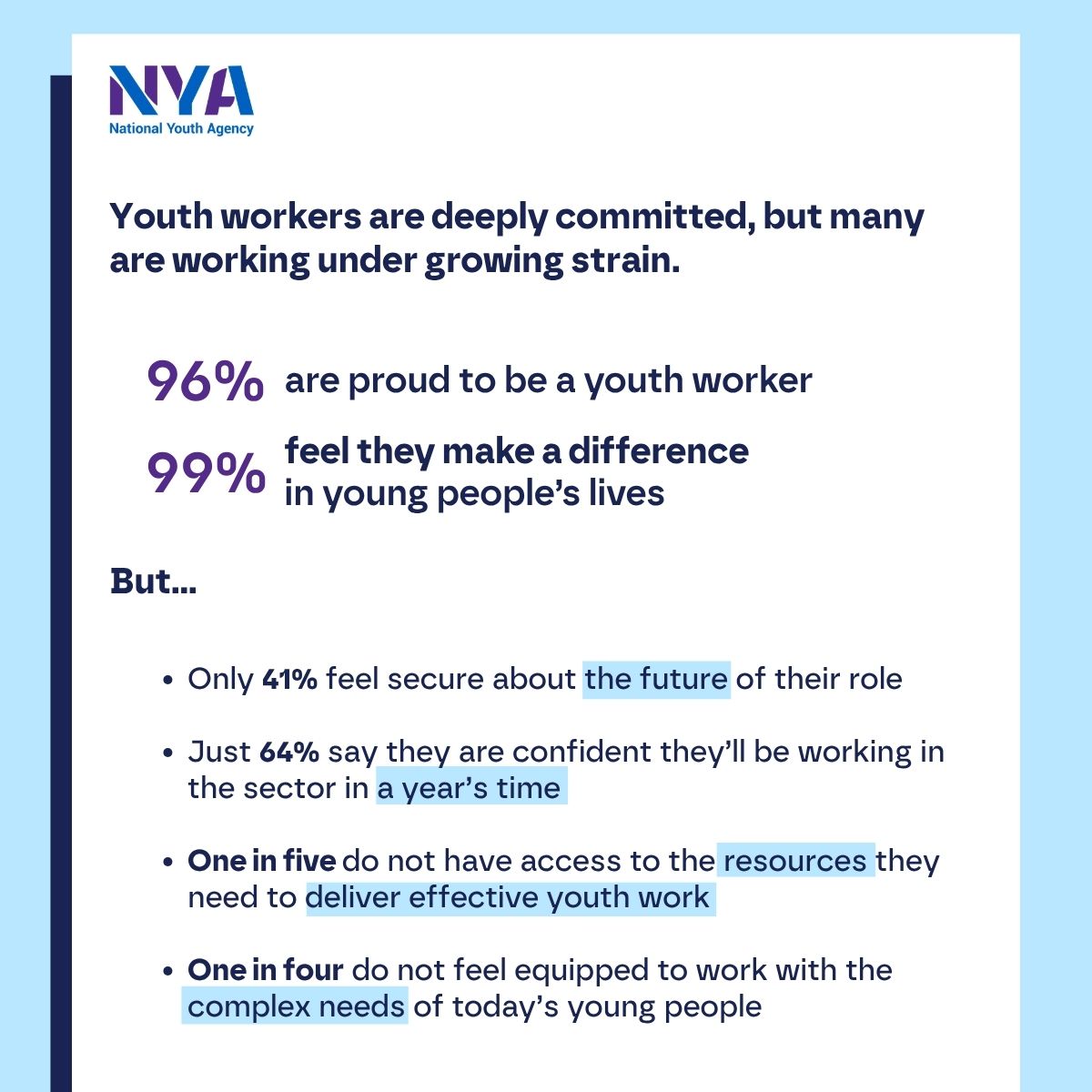
”Youth workers are supporting young people with more complex needs than ever before, yet many are doing so without the security, resources or training they need to sustain that work.
If we are serious about early intervention, mental health support and violence prevention, we must be serious about the youth work workforce. That means recognising youth workers as essential professionals and backing them with long term investment, clear standards, secure career pathways and better pay. Without urgent action, we risk losing experienced practitioners at the very moment young people need them most.”
Leigh Middleton OBECEO of National Youth Agency
We are committed to working with partners, commissioners and decision‑makers to ensure youth work is properly recognised, supported and resourced.

