
Leigh Middleton, CEO of the National Youth Agency (NYA), the Professional and Statutory Body for Youth Work in England, was awarded his OBE by the Princess Royal at the formal investiture ceremony on Thursday 16 January at Windsor Castle, in recognition of his services to the youth sector.
Amongst his credits, Leigh secured essential worker status for youth workers during the pandemic, and more recently ensured that the work of the UK Youth Parliament could continue after the British Youth Council’s sudden collapse last spring.
Leigh said: “I’m proud that my efforts to advocate for the youth work sector have been recognised but my focus remains on moving forward our mission to get more qualified youth workers into the profession and to get the sector back on its feet.”
After studying a science HND at college, Leigh’s early career involved working in the labs for a major food manufacturer in Reading; but his real passion was volunteering at the youth club which had been his salvation as a bullied teenager.
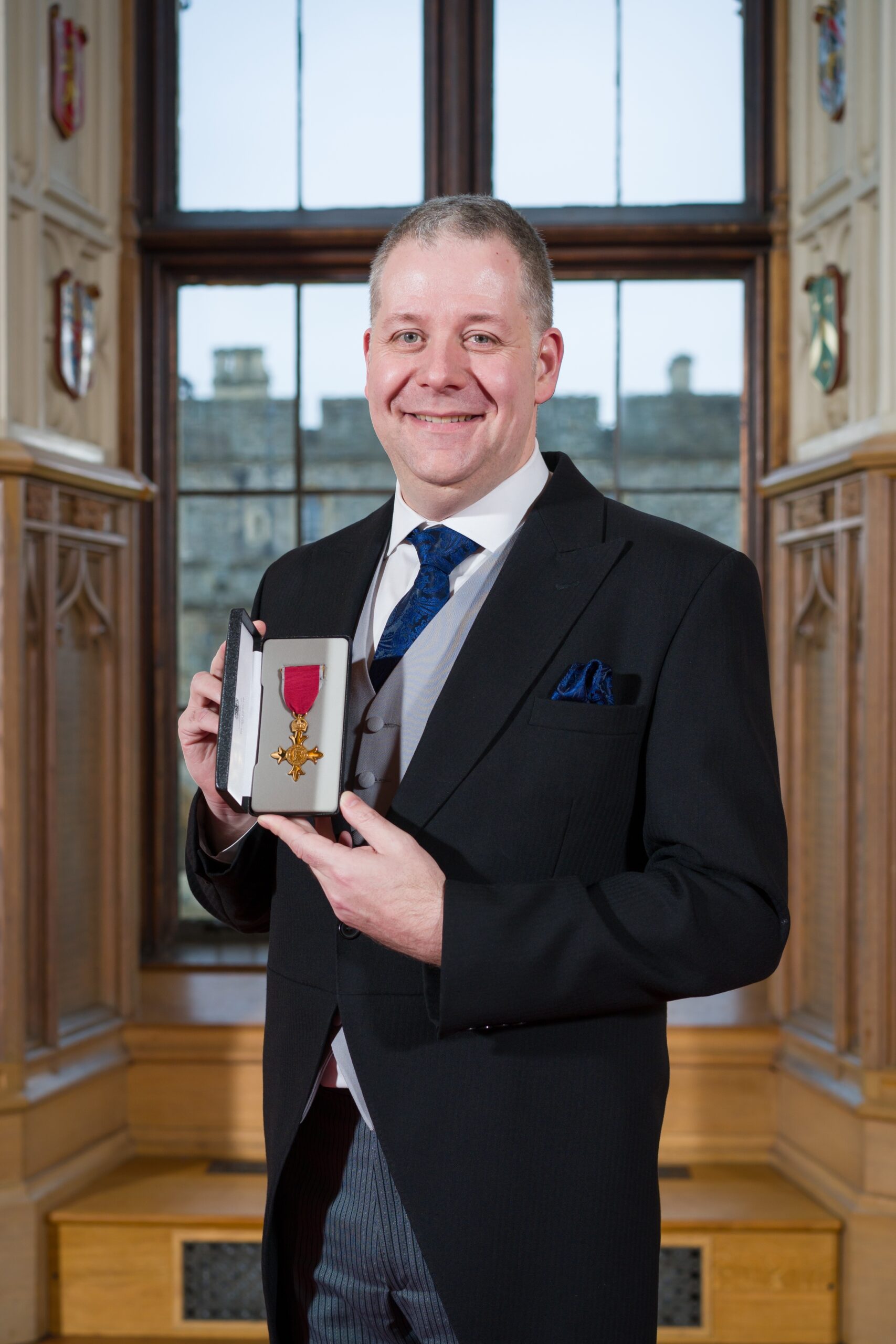
Leigh Middleton OBE
Image copyright @PAImages
Leigh explained: “I actually learnt to kayak at the youth canoe club and it became my hobby. I was being bullied at school, and I wasn’t particularly academic, so the youth club was a refuge for me. I also got the opportunity to run a youth action project and subsequently, became chair of Reading Youth Action, opening up volunteering opportunities for young people.”
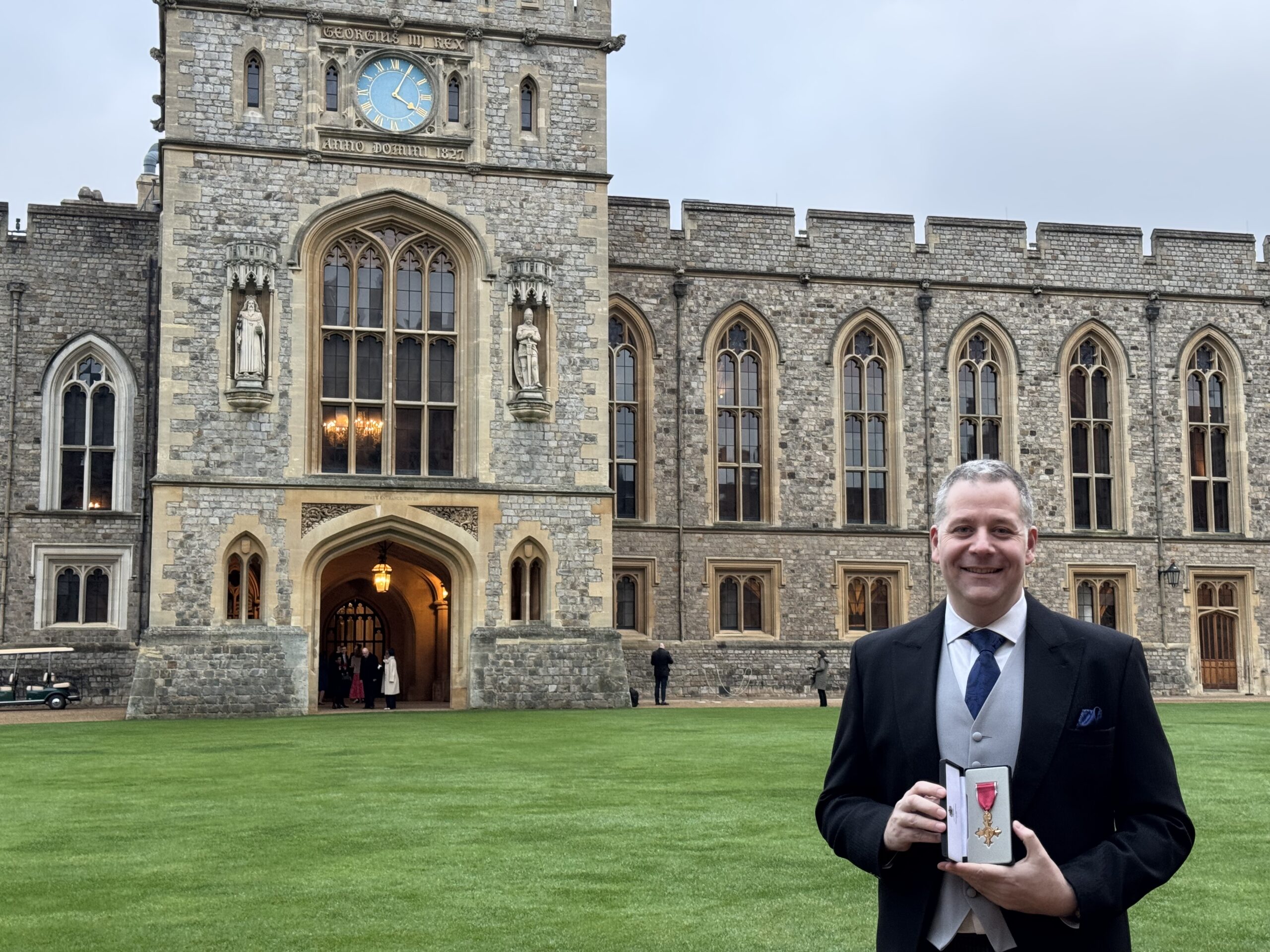
Leigh outside of Windsor Castle
It didn’t take long for Leigh to realise that youth work was his true vocation and he gave up his lab job to pursue a youth work degree at Reading University.
Leigh’s first job after graduating was as a peripatetic youth worker for Wokingham Borough Council and Thames Valley Police. It was here that Leigh really cut his teeth as a detached youth worker, engaging with young people hanging around in the streets and even gravel pits in the borough.
He explained: “Our remit was to reduce the amount of young people being reported to the police. The reality for some, was that the rest of the world had written them off, they had nowhere to go, and the gravel pits were the only place they could hang out. My colleague and I would go and talk to them and show them that we cared. After building their trust we were even able to take a few on a foreign trip. Just broadening their horizons was enough to help them see that they could achieve something with their lives. And engagement with the Police dropped by 90%.”
Leigh’s next job was as Senior Youth Worker in North Reading where he gained experience of leading outdoor learning and mobile based youth work. He then progressed into youth sector commissioning as Principal Commissioning Manager leading on developing new models of delivery for youth work in local communities in Surrey. This included exploring social investment models and public sector mutual opportunities.
Leigh was appointed CEO of the NYA in 2017 with a clear mandate to restore recognition of the value and impact of youth work amongst policy makers. Between 2018 -19 he drove a comprehensive national inquiry into the role and future of youth work (APPG for Youth Affairs Inquiry), publishing the recommendations in 2019.
In 2018 the NYA helped establish the independent National Youth Sector Advisory Board, as a forum for policy and practice for the youth sector, of which the NYA provides the secretariat.
The support NYA provided for the youth sector during the Covid-19 pandemic (March 2021 – June 2022) – involving Leigh presenting regular online briefings – enabled youth workers to continue supporting young people despite lockdown restrictions and earned him a place in the ‘top twenty’ pandemic pioneers by Charity Times.
Leigh is awarded his OBE as the government embarks on designing a new National Youth Strategy with youth voice at its heart.
He said: “We’re beginning to see a step change in how youth work is perceived, but the reality is that young people have never needed the support of youth workers more. My ambitions for the sector reflect my deep belief in the right of every young person to have access to safe spaces and a trusted adult who can help them flourish as they transition into adulthood.”
“I feel optimistic about the opportunities for youth work and am looking forward to working with the government and others in the sector to help inform how youth work can bring about real change not just in our young people, but society at large.”
