Bringing Democratic Education to Life:
New guidance from NYA, Youth Council UK and York St John University helps youth workers support young people to understand democracy, think critically, navigate misinformation and take meaningful action in their communities.
Young people want to understand more about politics and democracy, but many lack opportunities to explore these issues in meaningful ways. As debate continues around votes at 16, the National Youth Agency (NYA), in partnership with Youth Council UK and York St John University, has published new guidance to help youth workers support young people’s participation in democracy.
”Young people are more likely to take part in democracy when they understand how elections work, know how to participate and feel confident that their voice matters. An impartial and high-quality democratic education can make a real difference.
This new resource complements the Electoral Commission’s existing work with educators and youth practitioners, supporting those who work directly with young people to develop the tools, understanding and confidence they need to participate fully in our democracy.”
Lauren Valentine,Senior Education Officer, Electoral Commission
The guidance supports youth workers to create safe, inclusive and non-partisan spaces where young people can explore democracy, discuss current affairs, understand different perspectives and develop confidence in their own voice.
Supporting young people to engage with democracy
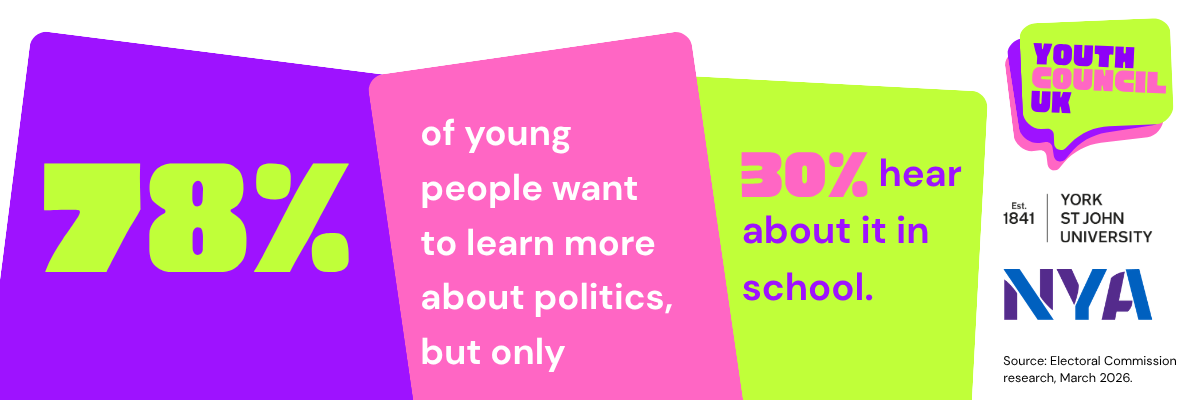
Research from the Electoral Commission (March 2026) found that 78% of young people want to learn more about politics, yet only 30% of under-18s say they hear about politics in school.
At the same time, young people are increasingly exposed to political information, opinions and misinformation online. Youth work has a vital role to play in helping them navigate this landscape, providing trusted environments where they can ask questions, think critically and explore the issues affecting their lives.
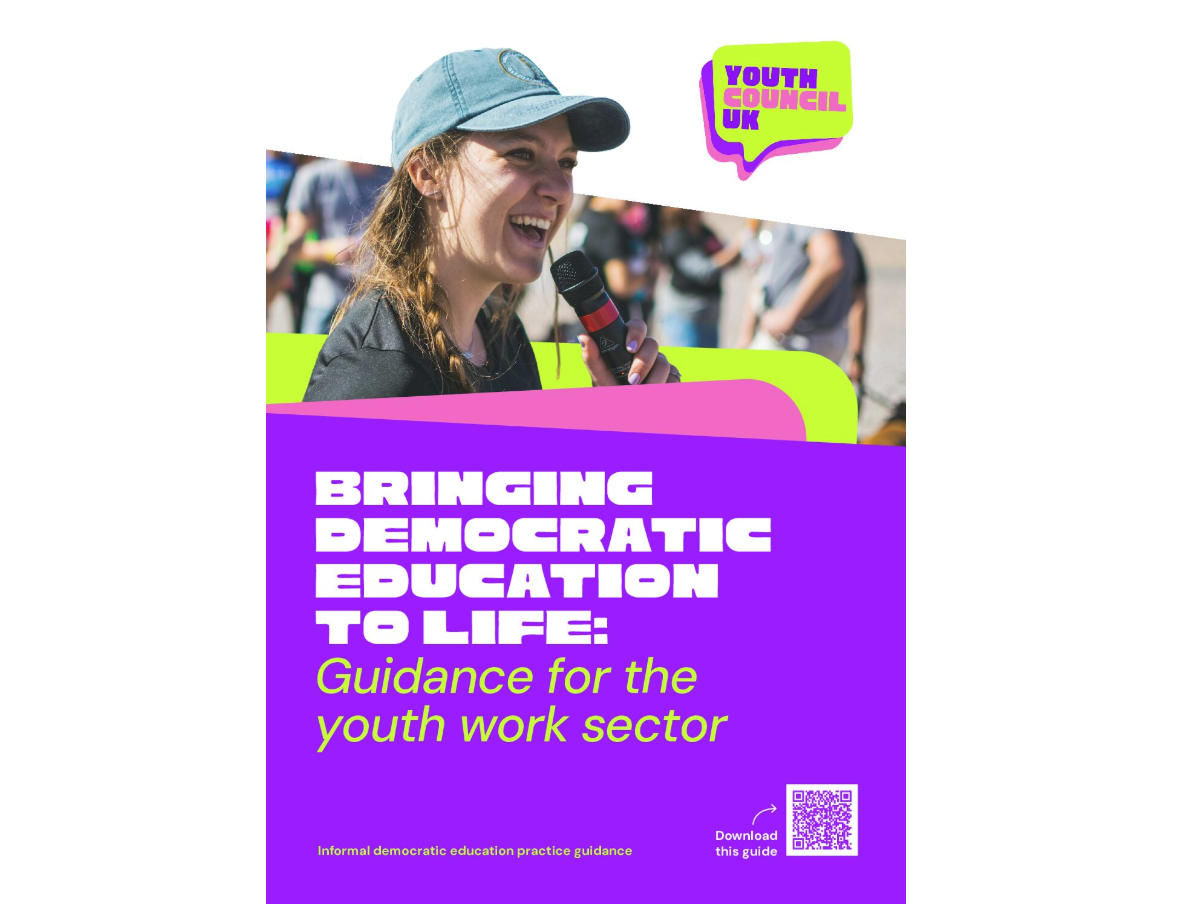
Bringing Democratic Education to Life has been developed to help youth workers make democratic education a practical, engaging part of everyday youth work.
Bringing Democratic Education to Life
What’s included in the guidance?
The resource includes:
- Practical tools and activities
- Reflective exercises for practitioners
- Real-world case studies
- Guidance on political impartiality and balanced facilitation
- Support for discussing current affairs and controversial topics
- Approaches to helping young people identify and challenge misinformation
- Ideas for embedding democratic participation throughout youth work practice
The guidance encourages practitioners to create environments where all young people feel able to contribute, listen to different perspectives and form their own informed views.
Democracy is more than voting
While voting remains an important part of democratic life, young people’s participation extends far beyond elections.
From youth councils and social action projects to volunteering, campaigning and community leadership, young people contribute to democracy in many different ways. The guidance encourages youth workers to help young people recognise their influence, understand their rights and responsibilities, and develop the confidence to shape change in their communities.
By participating in decisions that affect them and seeing the impact of their contributions, young people can build a stronger sense of agency, belonging and civic responsibility.

Bringing research and practice together
Co-authored by Dr Carole Pugh, Senior Lecturer in Children, Young People and Education at York St John University, the guidance draws on academic research and youth work expertise to support high-quality democratic education.
Helping every young person have their say
The publication reflects NYA’s wider commitment to ensuring that all young people, including those at risk of social exclusion, have equitable and meaningful opportunities to participate in democracy.

”Every young person, whatever their background or prior knowledge, should have a safe and inclusive space to explore democracy, discuss citizenship and current affairs, think critically and develop confidence in their own voice. This resource could not be more timely: as the new Youth Council UK gathers pace, it will help youth workers turn those conversations into meaningful action, supporting youth democracy and social action led by young people themselves."
Esther Horner-AirdStrategic Youth Voice Lead at the National Youth Agency
Download the guidance
Bringing Democratic Education to Life equips practitioners with the knowledge, confidence and practical tools to support the next generation of active, informed and engaged citizens.
