The 2024 Snapshot report shows that there’s increasing demand for mental health support set against precarious finances of voluntary sector youth work providers.

The report
Our latest National Youth Sector Census ‘snapshot’ report shows that the voluntary and community sector (VSC) continues to do the lion’s share of delivery, and that there’s an increasing demand for existing services.
Over two-thirds of the voluntary and community sector say that increasing demand is their second biggest challenge after an increase in operating costs.
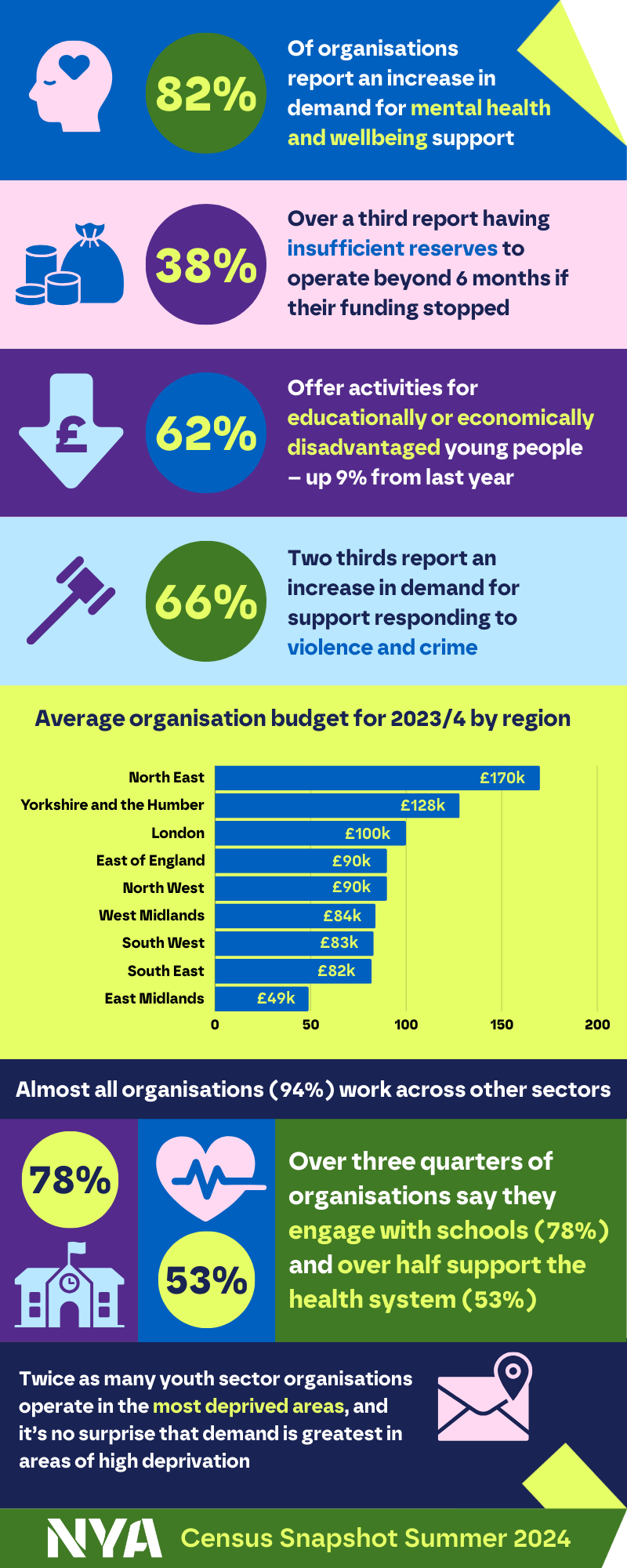
The demand for mental health support has increased more than any other targeted service, with demand increasing amongst 82% of organisations.
Increased demand is starkly pitted against the precarious finances of youth work providers, with nearly half of VCS organisations reporting having insufficient reserves to operate beyond six months if their funding stopped. Furthermore, organisations in more deprived areas are more likely to have shorter reserves.

National and regional analysis
Please use the tabs below to switch between national analysis and any individual region’s analysis.
- National
- East Midlands
- East of England
- London
- North East
- North West
- South East
- South West
- West Midlands
- Yorkshire and the Humber
This year’s Census snapshot report is based on 907 responses, of whom 84% are from the VCS (up from 82% last year) and the remainder of the 100 responses are from Upper Tier Local Authorities, District Councils, Metropolitan Borough Councils and unitary authorities.
Key fundings from the report include:
- Around two-thirds of organisations report an increase in demand for support responding to violence and crime.
- Around two-thirds (64%) report an increased demand in services addressing employment, training and skills for work – resonating with the reported rise in young people who are NEET (not in education, employment or training) reported by Youth Futures Foundation.
- Organisations that offer employability and skills for work most commonly provide information advice and guidance, support to develop soft skills and mentoring or coaching to young people.
- Twice as many youth sector organisations operate in the most deprived areas, and it’s no surprise that demand is greatest in areas of high deprivation.
- Almost two-thirds (62%) offer activities for educationally or economically disadvantaged young people – up 9% from last year.
Young people in the East Midlands are predominantly taking part in youth work which provides them with access to volunteering and social action, leisure activities, mentoring and befriending support as well as having a voice on the issues that matter to them.
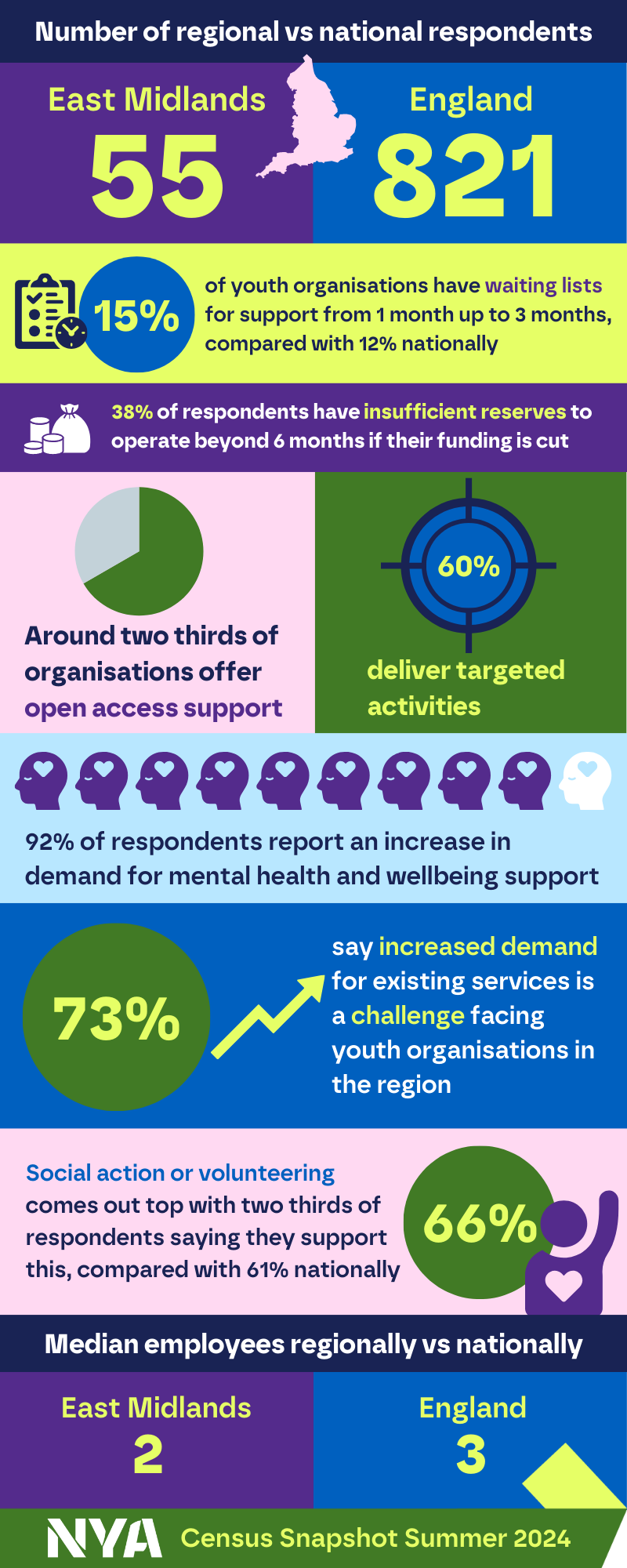
Around two thirds of youth work organisations offer open access support and 60% also deliver targeted activities. 80% of all providers offer mental health support as one of their target services.
Increased demand for existing services is one of the most common challenges within the youth work sector in the East Midlands (flagged by 73% of respondents). This is closely followed by a decline in funding or operating budgets (66% of organisations) and staff recruitment (61%).
15% of youth organisations in the East Midlands say they have waiting lists for support from one month up to three months, compared with 12% nationally.
Young people in the East of England are taking part in open access and detached youth work which provides them with access to leisure activities, opportunities to have a voice on the issues that matter to them, mentoring and befriending.
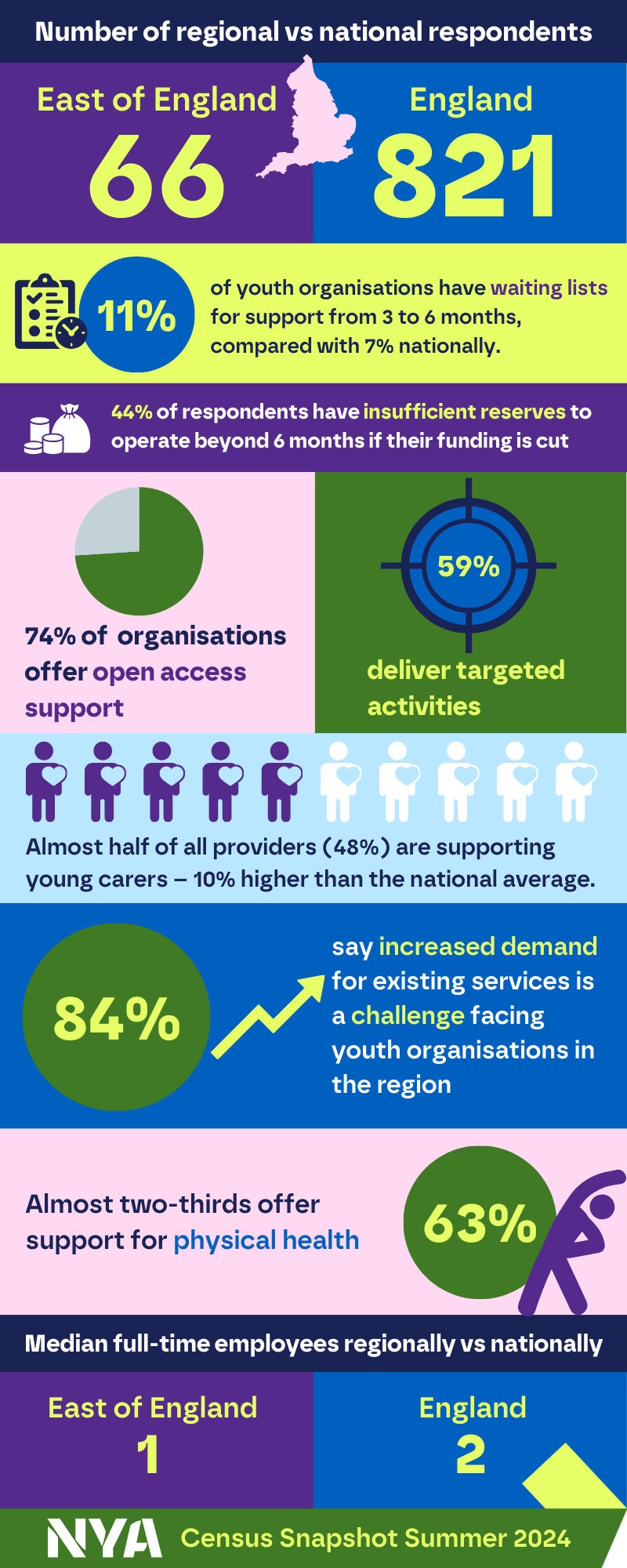
Over three quarters (85%) of youth work providers provide mental health support as a targeted service and nearly half of all provides are supporting young carers, ten percent higher than the national average.
Increased demand for existing services is one of the most common challenges facing young organisations in the region, flagged by 84% of respondents (5% more than the national average). This is closely followed by a decline in funding or operating budgets (64% of organisations) and staff recruitment (59%).
11% of youth organisations in the East of England say they have waiting lists from three to nine months, compared with 7% nationally.
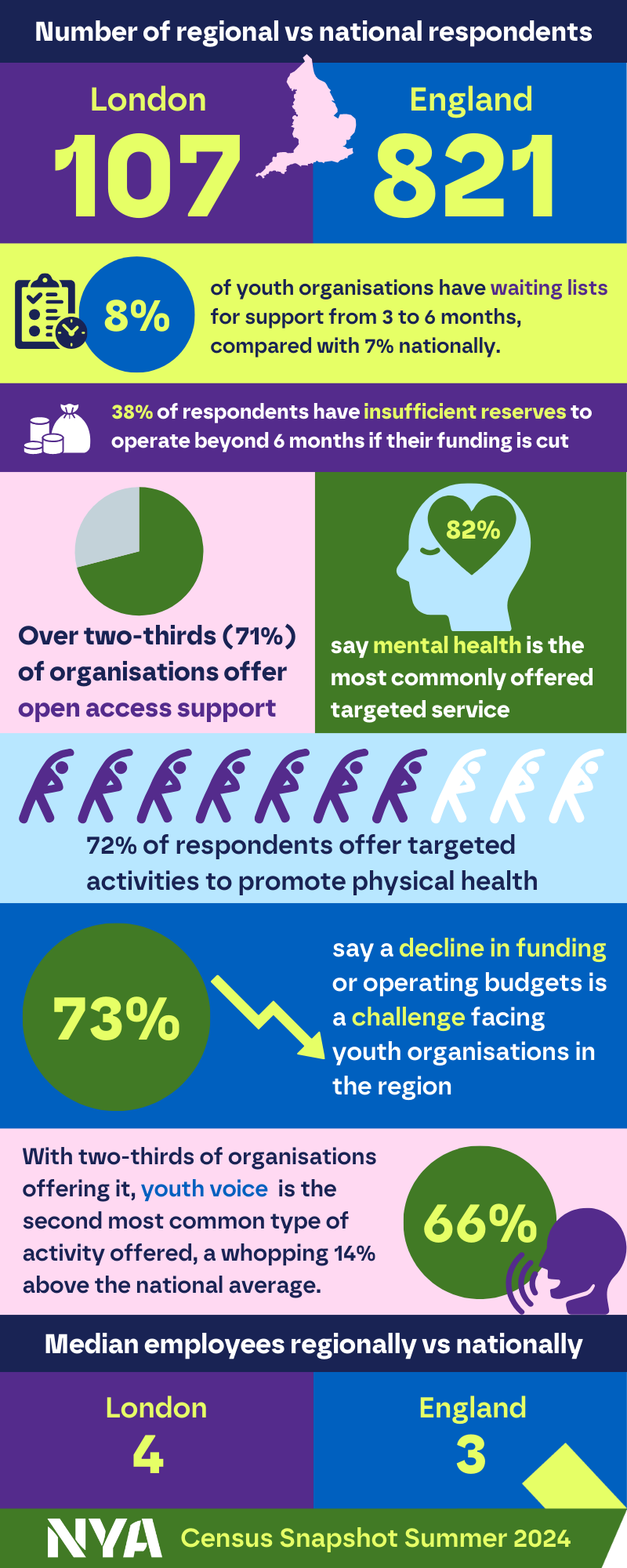
Young people in London are taking part in open access and detached youth work, with two thirds of providers delivering support to promote ‘youth voice’, as well as facilitating social action and volunteering opportunities. Providing leisure activities and targeted support is also offered by over half of all those who completed the Census.
82% of respondents cited mental health and the most commonly offered targeted service, closely followed activities to promote physical health (72%).
An increased demand for existing services is one of the most common challenges facing youth organisations in the region, with (79% cited it as a challenge). This is closely followed by a decline in funding or operating budgets (73%) and staff recruitment (58%).
8% of youth organisations in London say they have waiting lists from 3 to 9 months, slightly above the national average of 7%.
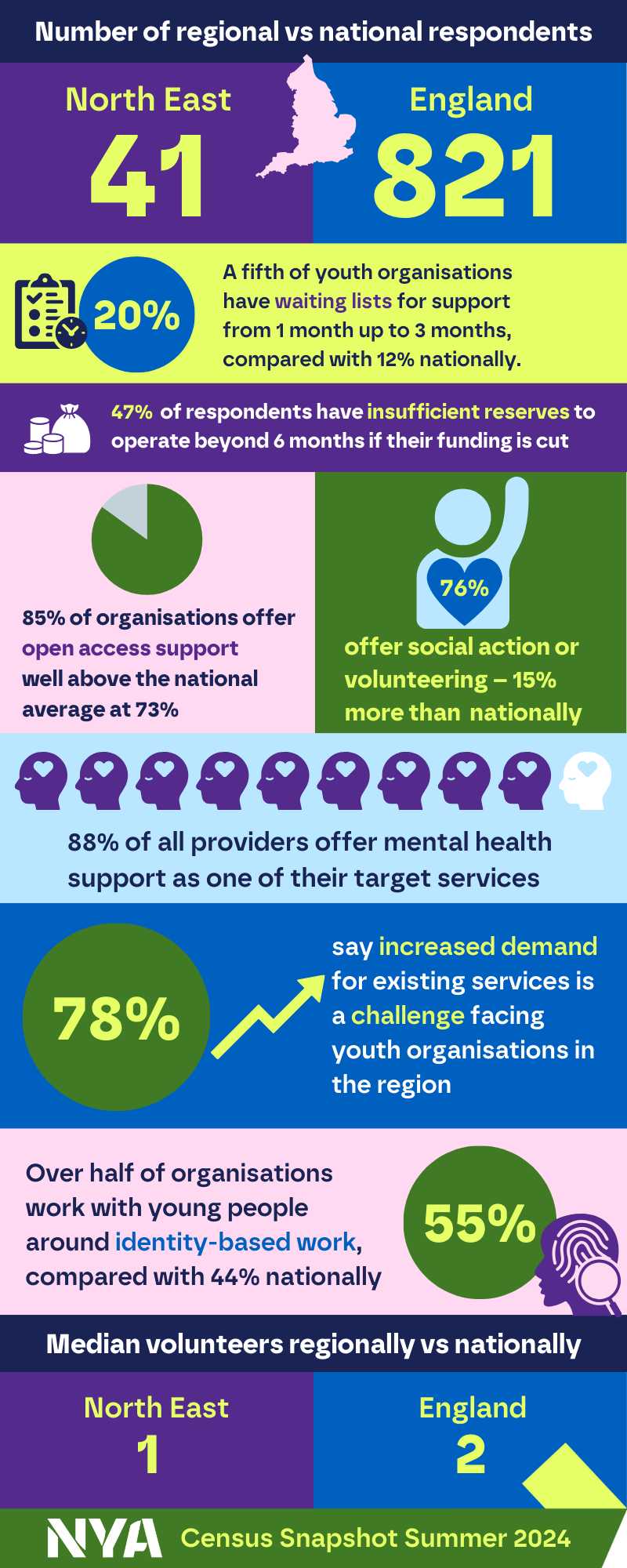
Young people in the North East are taking part in open access and detached youth work, which provides them with access to volunteering and social action, leisure activities, as well as support to have a voice on the issues that matter to them.
The majority (88%) of youth work providers offer mental health support as a targeted service and nearly half (48%) are supporting young people who have experience of being in care.
A fifth (20%) of youth organisations in the North East say they have waiting lists of between one month to three months, compared with 7% nationally.
Increased demand for existing services is one of the most common challenges facing youth organisations in the region, with 78% citing it as a concern. This is closely followed by a decline in funding or operating budgets (69% of organisations) and staff recruitment (66%, compared with 61% nationally).
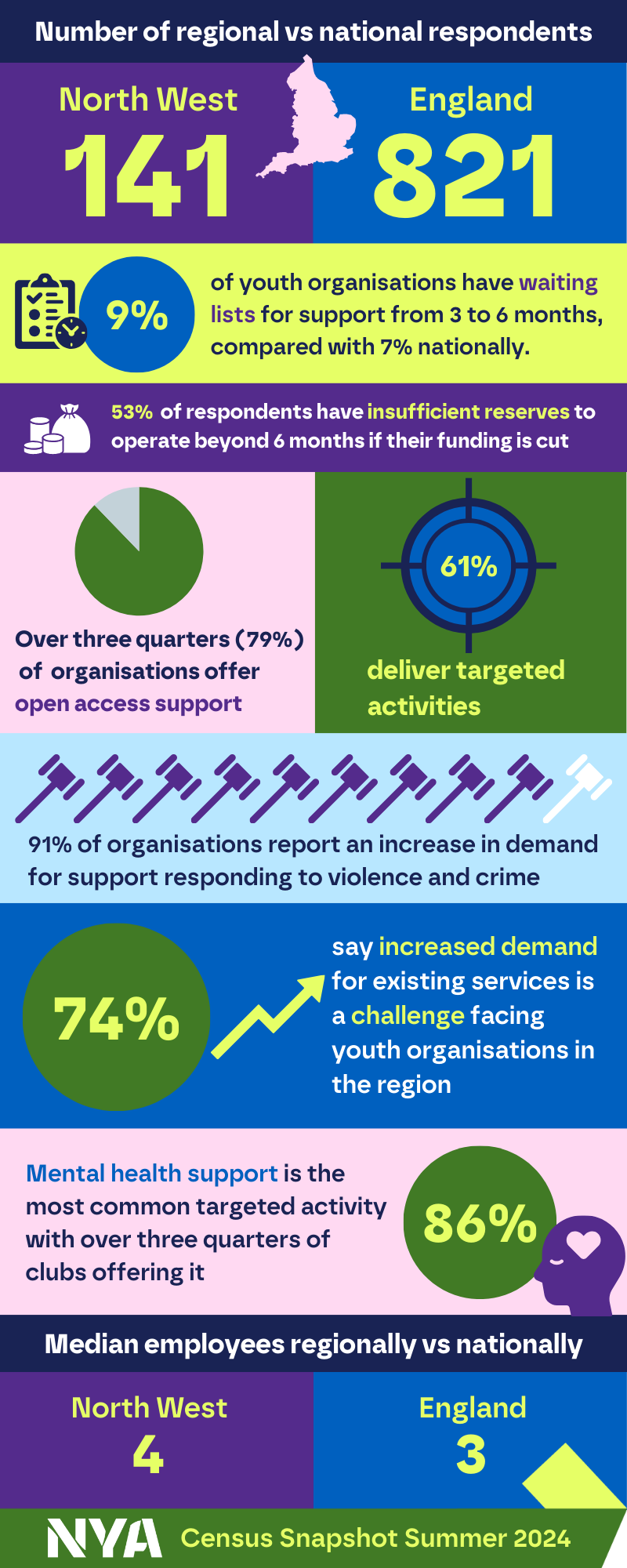
Young people in the North West are taking part in open access and detached youth work, which provides them with access to volunteering and social action, leisure activities, as well as support to have a voice on the issues that matter to them. They also benefit from targeted mental health support; Information, advice or guidance; Education, Training and Skills and support through their school or college.
9% of youth organisations in the North West say they have waiting lists of between 3 and 6 months, compared with 7% nationally.
Increased demand for existing services is the most common challenge facing youth organisations in the region, with 74% saying it is a worry. This is closely followed by a decline in funding or operating budgets (71%) and staff recruitment (65%).
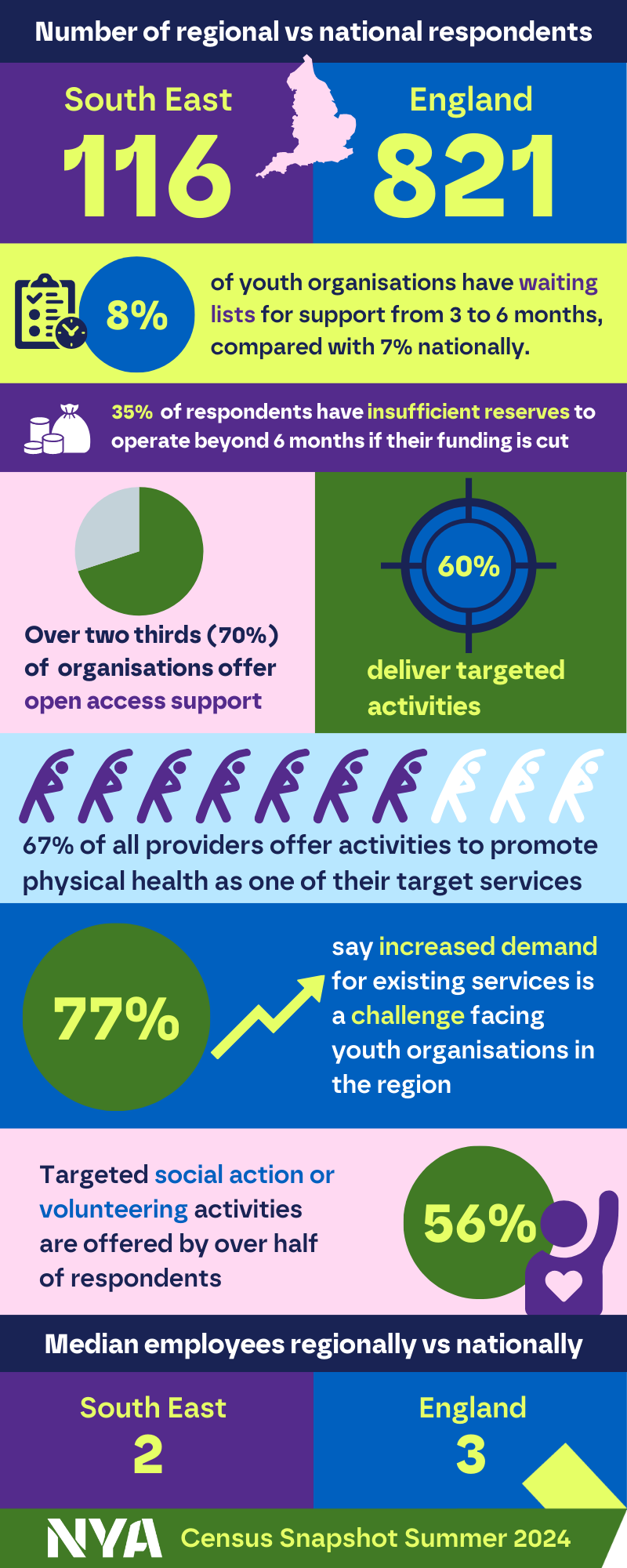
Young people in the South East are predominantly taking part in open and targeted youth work which provides them with access to volunteering and social action, leisure activities, as well as support to have a voice on the issues that matter to them.
The most commonly offered target activity is mental health support with 83% of youth work providers saying they offer this support.
Increased demand for existing services is one of the most common challenges facing young organisations in the region, with 77% saying it is a concern (2% more than the national average). This is closely followed by a decline in funding or operating budgets (68%) and staff recruitment (56%).
8% of youth organisations in the South East say they have waiting lists for support from 3 to 6 months, compared with the national average of 7%.
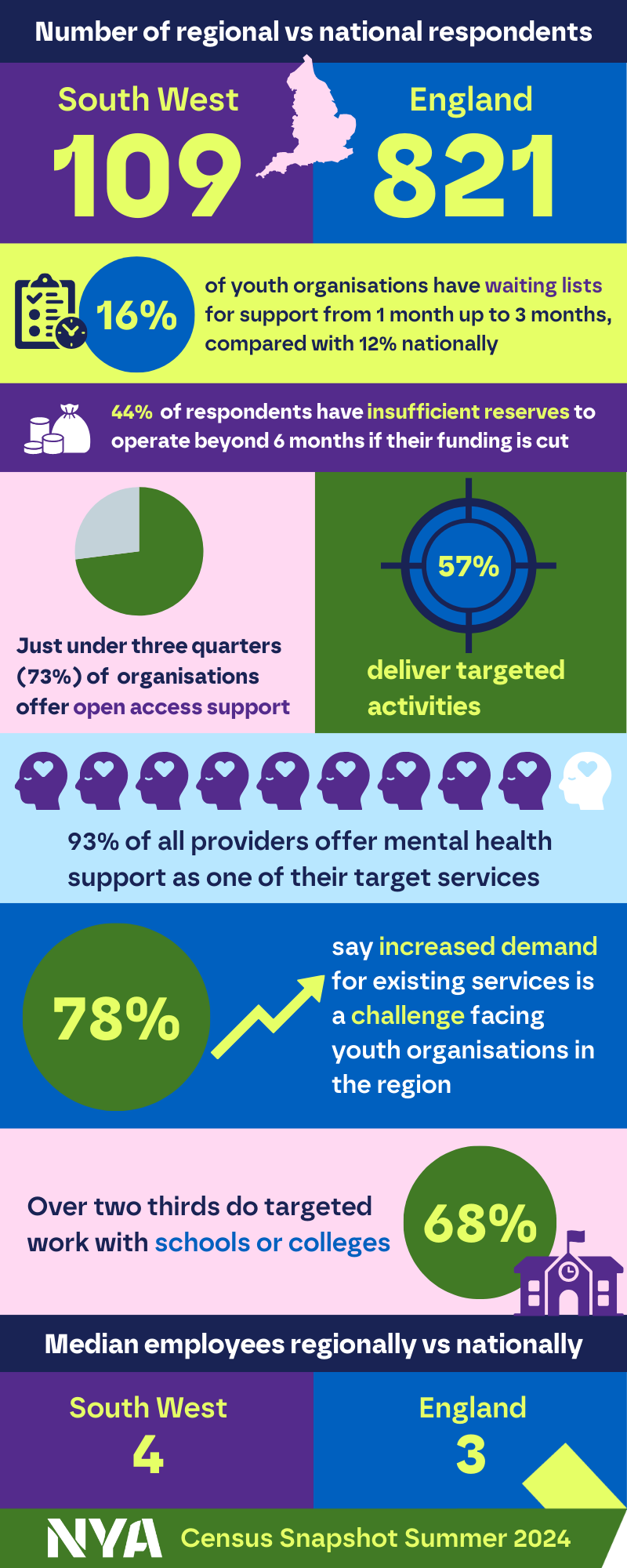
Young people in the South West are predominantly taking part in open and targeted youth work which provides them with access to volunteering and social action, leisure activities, as well as support to have a voice on the issues that matter to them.
The most commonly offered target activity is mental health support with a whopping 93% of youth work providers across the region saying they offer this support.
Increased demand for existing services is one of the most pressing challenges facing young organisations in the region, with 78% citing it as a challenge. This is closely followed by staff recruitment (65%) and a decline in funding or operating budgets (63%).
16% of youth organisations in the South West say they have waiting lists for support from 1 to 3 months, compared with the national average of 12%.
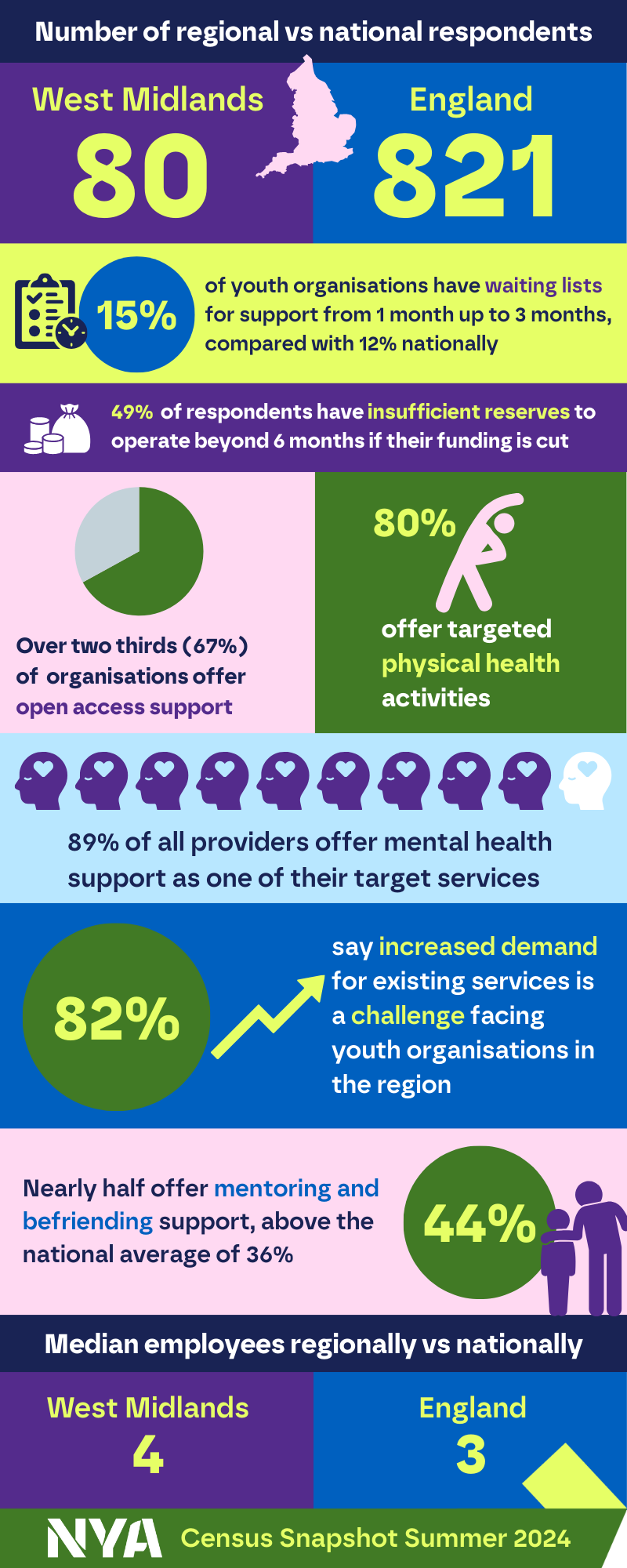
Young people in the West Midlands are predominantly taking part in open and targeted youth work which provides them with access to volunteering and social action, mentoring and befriending opportunities, as well as support to have a voice on the issues that matter to them.
The most commonly offered target activity is mental health support with a whopping 89% of youth work providers across the region saying they offer this support.
Increased demand for existing services is one of the most common challenge facing young organisations in the region, with 82% citing it as a concern. This is closely followed by a decline in funding or operating budgets (73%) and staff recruitment (62%).
15% of youth organisations in the West Midlands say they have waiting lists for support from one to three months, compared with the national average of 12%.
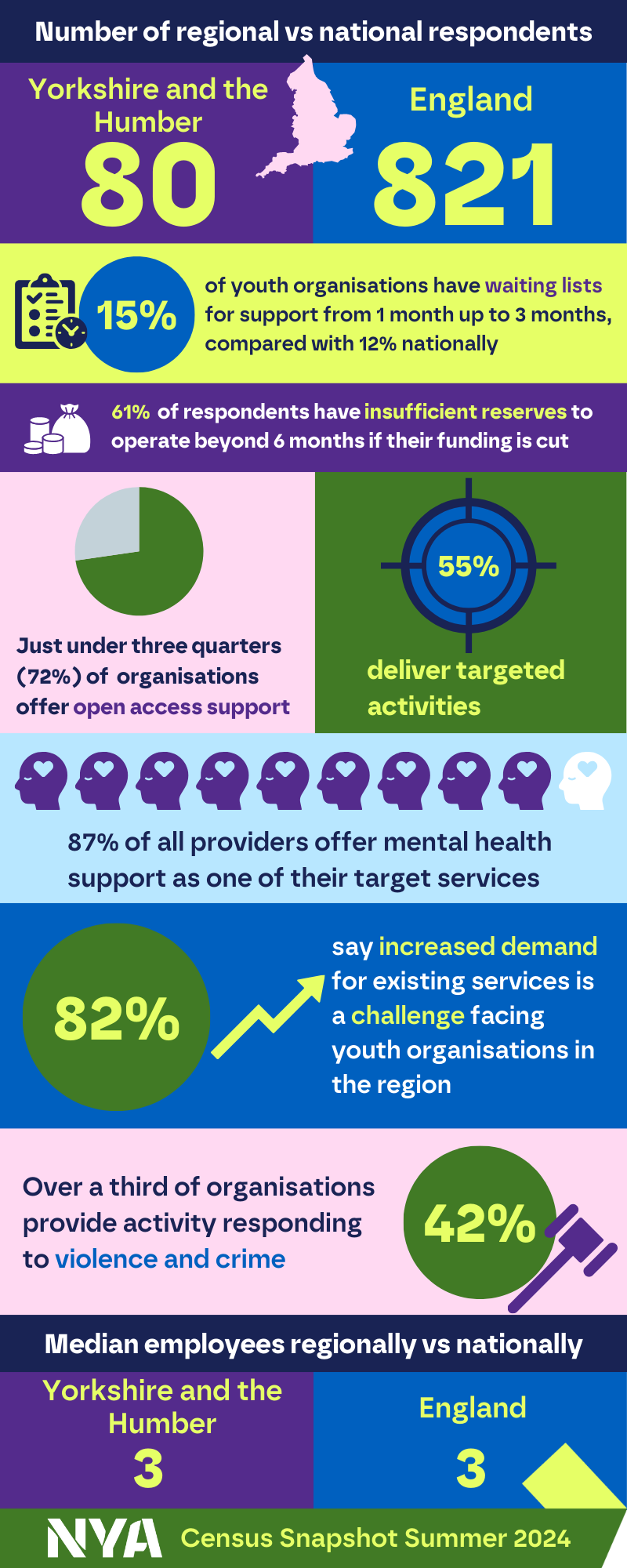
Young people in Yorkshire and the Humber are predominantly taking part in open and targeted youth work which provides them with access to volunteering and social action, other leisure activities, as well as support to have a voice on the issues that matter to them.
The most commonly offered target activity is mental health support with a whopping 87% of youth work providers across the region saying they offer this support.
Increased demand for existing services is one of the most common challenges facing youth organisations in the region, with 82% identifying it as an issue. This is closely followed by a decline in funding or operating budgets (64%) and staff recruitment (59%).
15% of youth organisations in the Yorkshire and the Humber say they have waiting lists for support from one to three months, compared with the national average of 12%.
”"The funding challenges faced by grassroots youth organisations, in particular, mean that they are stuck in a catch 22, of wanting to expand their offer to extend their reach, but as they are unable to offer the assurance of long term contracts, they just don't have the capacity to meet the demand for new or more activities, or indeed attract new staff to grow their offer."
Kevin JonesHead of Workforce, NYA
”“The money we get from local government only amounts to about £10,000 a year and our basic running costs are about £350,000, so it’s a drop in the ocean…
The impact of the collapse of the youth work sector has been enormous. Whilst The Shewsy has managed to stay afloat, we know that there’s a greater range of activities and support we could be providing to meet local need.
...unless we, and the sector as a whole, gets the investment this requires more young people are going to fall off the conveyor belt when they leave formal education.”
Steve HolroydSenior Executive Officer, Shrewsbury House Youth and Community Centre, aka ‘The Shewsy’, in Everton
Interactive dashboard
The Census is located on the Youth Work One platform.
The Census is reported alongside an interactive dashboard which allows individuals to drill down into the Census dataset in more detail. Youth Work One is a one stop shop for those working with young people, hosting guidance, resources and a forum to help youth workers improve their practice and network with their peers.
