Lorraine Lambert, 53, has over 20 years’ experience in youth work and is a distinguished British Paralympian. She began shooting at age twelve through the Nautical Training Corps in Portsmouth, joining their marksmanship team.
“The discipline side of it helped me gain a new skill. And that foundation of resilience and developing self-esteem has helped with everything I’ve ever done.”
Discovering her calling
Lorraine’s youth work career began when she was 16, taking part in a Youth Training Scheme in Cosham, Portsmouth, where she progressed from support worker to assistant manager overseeing an outdoor activity centre, which provided opportunities for young people to try pursuits such as shooting, camping, archery, mountain biking, bushcraft and orienteering. In her 20s, she went onto volunteer with the Crawley Youth Project, supporting residentials and delivering detached youth work, which sparked her passion for supporting young people.
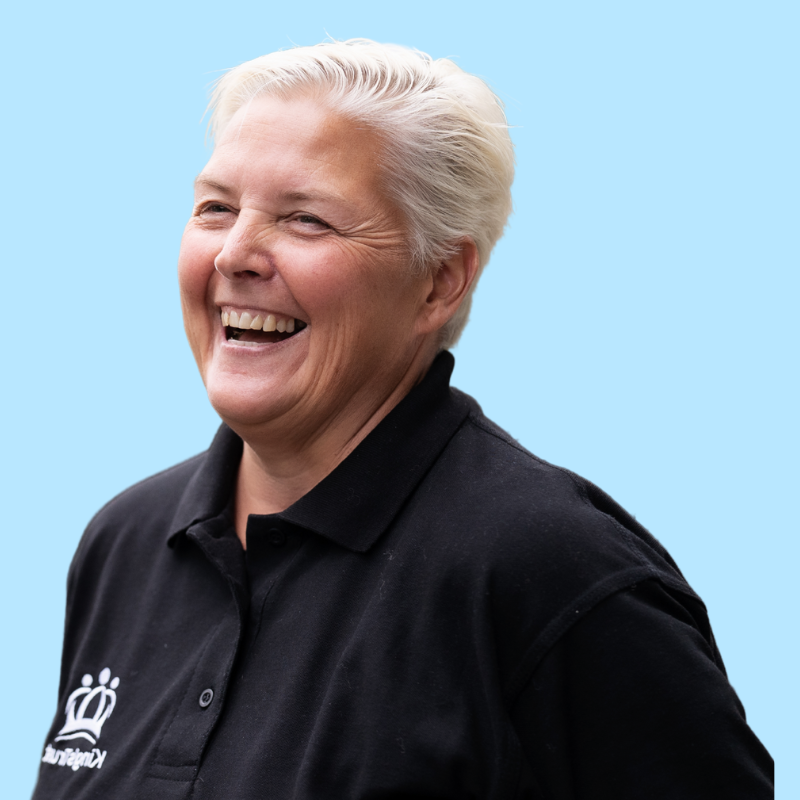
Lorraine Lambert
Youth Worker, Paralympian
“In the early days what attracted me to youth work was seeing the changes in young people when they are given the time and space to experience and learn something – they grew; this is the reason why I love youth work.”
“I’ve always advocated for more disability sports. And then at the age 24 I had the accident, and I became one of those disabled people.”
Overcoming adversity
In 1997, a rock-climbing accident left Lorraine unable to walk. At first, she believed her leg was simply broken, but after returning to the hospital for emergency surgery, the reality became far worse. When the surgeon visited her ward post-operation, his first words were, “So, what new career are you going to have then?” The question hit Lorraine hard, forcing her to confront the possibility that she might never return to sport.
After sixteen operations to save her leg, Lorraine made the life-changing decision to have it amputated in 2010.
“The experience shaped my understanding of what determination really is and re-defined success for me. It shaped how I look at life.”
Lorraine’s recovery after her leg amputation included relearning to walk using parallel bars, physiotherapy, counselling to cope with the physical, emotional and psychological impacts of limb loss and finally getting a prosthetic leg fitted to progress to independent walking.
“I had my low points, but I’ve always been determined to find solutions rather than dwell on problems. My parents instilled this mindset early on. Growing up with undiagnosed dyslexia, I pushed myself to keep going and never let challenges stand in the way of my progress.”
After the surgery Lorraine experienced exclusion, loss of identity and self-doubt – all things that many young people face. In her role as a youth worker, she draws on her own journey to walk alongside young people when they experience setbacks.
“By sharing my experience, I can help them navigate difficult times. I know the inner strength it takes and have an idea of how it feels to be in that position.”
Paralympic success
Later in 2010, Lorraine returned to shooting at the LimbPower Games, a charity which encourages and supports amputees and individuals with limb differences or impairments to participate in sport and physical activity. She soon caught the attention of a Paralympic GB squad member who was there and invited her to trial for the Paralympic training programme.
Lorraine went on to win her first individual gold medal in Dubai in 2011, represent Great Britain at the 2016 Rio Paralympics finishing just outside the medals, earn medals at World Cups in 2017 and 2019, and compete at the 2020 Tokyo Paralympics.
“For me, shooting is not just about the precision and the focus, it’s that inner calm… I’ve discovered that space where my disability didn’t define me, it became part of my new strength.”
“Having self-belief that you will make the next shot count – these are the lessons I bring into youth work to help young people understand that success isn’t always about winning. It’s about trying, setting goals and celebrating every small success.”
Returning to youth work
After Tokyo, Lorraine stepped away from competing to support her family and returned to youth work. She is now Youth Development Lead at The King’s Trust on the South Coast, delivering personal development courses for 16-25-year-olds not in education, employment or training (NEET). The programme helps build young people’s confidence, employability and life skills through activities like team building, community projects and residential trips.
“Giving young people the chance to try something new builds their confidence and can have a lasting impact.”
Lorraine works with young people with neurodiversity needs, helping them explore hidden talents and improve their wellbeing.
Professional development
Lorraine is a Level 3 qualified youth worker and is currently completing her Level 4 Certificate in Professional Development (Youth Work Leadership and Management) with the NYA Academy.
“I’ve always been one to stay in education. I believe that working with young people carries a huge responsibility and they deserve for me to be as qualified as I can be. It’s great to have the passion and be well informed – but if you’ve got the skills and you’ve gained the formal qualifications they help guide you because they are rooted in evidence.”
Lorraine feels the Level 2 and 3 youth work qualifications have helped build on the strong foundation she already had, formalising her experience and making her practice more rounded and intentional.
“Progressing to Level 4 has deepened my understanding and enhanced my ability to take on new challenges. It’s enabled me to mentor new employees, collaborate effectively with diverse delivery partners and contribute to the development of programme content – all while continuing to grow as a practitioner and advocate for young people.”
A life long mantra
Lorraine’s guiding principle, which she uses to inspire young people is ‘Aim high, anything is possible’ and it’s engraved on her prosthetic leg and Olympic shooting kit:
“Youth workers are vital in young people’s lives because we offer something that’s often missed – a safe space, trusted relationship and the opportunity to grow without judgement. In my role I see every day how transformative it is for young people to feel genuinely seen, heard and supported – which is at the heart of youth work.”
Despite her world-class acclaim she considers her youth work more important and fulfilling than any accolade.
“I’m prouder of my youth work than any gold medal and privileged to be part of the profession. I stand alongside my fellow youth workers to celebrate everything they do.”
Her message to all youth workers this Youth Work Week is clear and inspiring:
“Never underestimate the impact you’re having as a youth worker – it’s that steady presence behind a young person, that listening ear and that spark of belief you’re giving. And you may be the only person that is showing up for them sometimes. If you invest in a young person’s journey it helps build their brighter future.”
