The NYA developed a toolkit in the aftermath of the COVID-19 pandemic to support young people still struggling with the ongoing impact.
It helps youth workers create safe, supportive spaces for young people to process their experiences and take part in reflection.
How COVID19 affected young people
Education disruption
- Schools closed for extended periods during 2020-2021, with many young people learning remotely for months
- Exam cancellations and disrupted qualifications affected students’ futures and confidence
- Many young people experienced significant learning loss and educational setbacks
Mental health crisis
- NHS data shows children’s mental health referrals increased significantly during and after the pandemic
- Anxiety, depression, and loneliness surged among young people during lockdowns
- Self-harm and eating disorder referrals reached concerning levels during and after the pandemic, particularly for adolescent girls
Social isolation
- Critical periods of social development were spent in isolation
- Young people missed formative experiences: school proms, first jobs, social milestones
- Many lost vital connections with friends, extended family, and community
Loss and grief
- Almost 230,000 people in the UK died from COVID-19 or with COVID-19 being a contributing factor
- Thousands of young people lost parents, grandparents, loved ones, friends and peers
- Many could not say proper goodbyes or attend funerals due to restrictions
Economic impact
- Youth unemployment rose significantly, with opportunities limited
- Many families faced financial hardship, affecting young people’s sense of security
- Post-pandemic economic challenges continue to affect young people’s prospects
Abuse and neglect
- Parental and family stress increased due to unemployment, financial instability, and worsening mental health
- Many young people were exposed to heightened levels of harm and/or neglect with key safeguarding mechanisms and support systems closed, removing critical safety nets
Young people – especially those with learning disabilities, mental health needs, socio‑economic disadvantage, or other pre‑existing vulnerabilities – bore a disproportionate share of the pandemic’s long‑term consequences.
The long-term impact
The pandemic isn’t simply “over” for young people. Research shows that those who experienced COVID-19 as young people continue to face challenges with anxiety, social skills, and educational attainment and attendance. Many are still processing trauma and grief. Youth workers matter as you are often the trusted adults best placed to help them process these experiences safely and constructively.
While this toolkit is aimed at supporting young people, we understand that the implications of the pandemic are far reaching. We hope you find it useful to also check in on colleagues and to support individuals working in the sector.
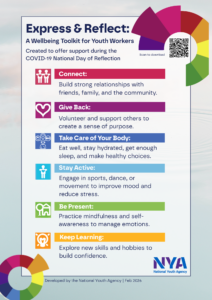
Download the Wellbeing Toolkit poster and QR code to display where you are:
”This pandemic and the years that have followed have been hard. Its effects are ongoing. But youth workers have stood alongside young people throughout and continue to do so with dedication and compassion. I encourage you to use these activities to create reflection spaces within your youth clubs and spaces, ensuring youth workers are available to "check in" at the end of sessions, offering trusted support, self-care and appropriate signposting to other services to enable those young people still struggling in the aftermath to grow and heal.
Thank you for the vital work you do.
Leigh Middleton OBEChief Executive, National Youth Agency