
When Sean Noone reflects on his journey into youth work, he credits one thing above all else: the youth service.
Today, Sean is Senior Practice Supervisor at Dudley Council, a Level 6 youth worker, a qualified Level 5 football referee and General Secretary for England Deaf Football. But his story began as a young deaf person looking for opportunities and support.
“I’m profoundly deaf and I’ve used British Sign Language all my life,” Sean explains. “Growing up, I experienced a lot of barriers in education, social situations and the wider community.”
Rather than holding him back, those experiences inspired him to help other young people overcome challenges of their own.
Finding confidence through youth work
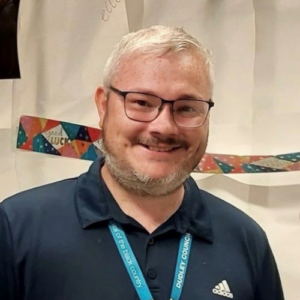
Sean Noone,
Senior Practice Supervisor
As a deaf young person, Sean was looking for somewhere he could communicate easily, meet other young people with similar experiences and feel part of a community. He found this in a deaf-friendly youth club where he met youth workers who understood deaf culture and communicated using sign language.
Sean often reflects on the encouragement he received from a youth worker who believed in him when others questioned what he could achieve. “I’m still in contact with a youth worker that worked with me when I was younger and motivated me and helped me,” he says. “If I didn’t have him, then I probably wouldn’t be where I am now.” That support gave him the confidence to pursue youth work as a career and helped shape the professional he has become today.
“Youth work made me who I am,” he says. “It helped me build confidence, take opportunities and reach my potential.”
Sean went on to study youth work at Newman University Birmingham, becoming qualified to better support young people.
Sean’s path wasn’t always straightforward.
He recalls being told by a careers adviser that youth work might not be a suitable profession because he was deaf. Earlier in life, a headteacher doubted he would achieve much at all.
“I wanted to prove people wrong,” Sean says, “and my youth worker encouraged me to try it.“
Now working in a senior role, he believes his journey shows young people that barriers and assumptions do not have to define their future.
Why accessibility matters
Throughout his career, Sean has been passionate about improving opportunities for deaf young people.
He believes communication and deaf awareness are often overlooked, even in well-intentioned settings.
“Sometimes a young deaf person can walk into a room and immediately feel excluded because they can’t access the conversation.”
A key principle that guides Sean’s work is giving young people the space to lead.
Whether he’s working with individuals or in schools, he focuses on listening first.
“I always try to let young people lead. They know more than people often give them credit for.”
As part of Sean’s role, he delivers workshops in schools to both deaf and hearing young people, working alongside registered BSL interpreters where needed.
Shortly after one session on grooming and online exploitation, a young person recognised warning signs in her own situation and reported her concerns
The disclosure led to intervention and support that protected the young person from ongoing exploitation.
“If we hadn’t delivered that session, what could have happened to that young person?” he reflects.
The experience brought home just how important youth workers are in protecting young people.
Outside his day job Sean is a qualified football referee and General Secretary for England Deaf Football, using his role to widen access to the sport for young deaf people to build their self-confidence and develop friendships.
Expanding local provision
Having recently been promoted to Senior Practice Supervisor, Sean will oversee youth workers and Level 3 apprentices, helping to develop the next generation of youth work professionals across Dudley. He also hopes to expand local provision and strengthen partnerships with other professionals working with young people.
His ambition remains simple: to help young people believe in themselves.
“I’m here to support and encourage young people to be confident, to thrive, to develop and to achieve their potential.”
